
Special Event – Usher 1F Syndrome
Never heard of Usher 1F Syndrome? Well, it’s time you did!
It’s the leading cause of inherited deaf-blindness among Ashkenazi Jews. Carried by 2% of Ashkenazi Jews, it was discovered in 2001 through Tay-Sachs testing.You will want to know about this. You need to know about this. Join us for this incredibly important program.
Hear from. . . .
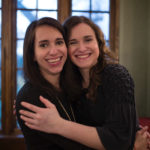 Rachel, age 34, and Jessica, age 26, about how they are living their lives with, and despite, Usher 1F, and what a cure for their vision would mean to them.
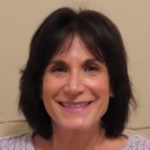 Melissa Chaikof about her experiences both as a parent advocating for her children over the years and now working fervently for a cure so that they can see the future.
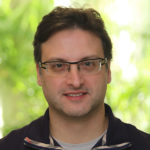 Vincent Tropepe, PhD, University of Toronto, Department of Cell & Systems Biology, about his research to help make the Chaikofs’ dream a reality.
Introduction by Sari Springer, Director, Usher 1F Collaborative
Moderated by Aliza Spiro
7:00 – 8:00 PM
Live via Zoom
Free admission
Click here to register
(And share this with everyone you care about!)
Meet the Panel:
Rachel Chaikof
Rachel was born deaf and is going blind from a rare Ashkenazi Jewish genetic disease. She grew up being told many times what she could not do because of her disabilities. She was denied entry into the Peace Corps on the basis of her disabilities but reapplied and was accepted the second time. She was invited to serve for two years in Cameroon, a country in west Africa. While educating Cameroonians with disabilities about mitigating the spread of HIV/AIDS and sexual health reproductive health options, she fell in love with a fellow Peace Corps Volunteer.After serving in the Peace Corps, she settled in the Washington D.C. area with her fellow Peace Corps Volunteer, Alex, who is now her husband. She currently works for an international development consulting firm focusing on global health and disability inclusion in developing countries.
Rachel graduated from Savannah College of Art and Design summa cum laude with a Bachelor of Arts in photography and University College London with a Master of Arts in anthropology. At the end of her Peace Corps services, Rachel received an award from the U.S. Ambassador to Cameroon, Michael Hoza, for her work with persons with disabilities during her Peace Corps service. Her story about her experiences living with disabilities has been featured in Moment Magazine, Cochlear Americas, Volta Voices, the Jewish Advocate, the Newton Tab and Jewish Weekly. She spoke at Hear Indiana’s Listening and Spoken Language Conference, Cochlear Celebration, and Women and Girls Africa Summit. She has published articles on disability issues for consulting firms and the Peace Corps. For 12 years, she ran a blog on hearing loss which attracted 10,000 to 14,000 visitors and was shared by cochlear implant manufacturers and hearing loss organizations. During her time at Savannah College of Art and Design, she was a writer and editor for the school’s newspaper and won multiple awards from the Georgia Collegiate Press Association
Jessica Chaikof
Jessica Chaikof was born profoundly deaf and received her first cochlear implant in May of 1996 at age fifteen months. At the time, she was the youngest child in the U.S. to receive a cochlear implant. In 2006, she learned that the cause of her deafness is Usher Syndrome type 1F. Despite the Usher diagnosis, Jessica has refused to let anything stand in the way of pursuing her dreams. In undergrad at Wheaton College in Norton, Massachusetts, she advocated for the inclusion of students with disabilities by co-founding, WheAccess, the first club on campus to support students with disabilities and to educate all members of the college community about living with disabilities.Jessica is currently attending graduate school at American University in Washington, DC, to obtain her master’s degree in sociology and is planning to enter a PhD program in the fall of 2022. Her research interests center in medical sociology with a special focus on chronic illness, disability, and accessibility in higher education. Her undergraduate senior thesis, Faculty Perceptions Toward Accessibility in the College Classroom, which examined how faculty understand accessibility and the challenges they face in providing accommodations to students with disabilities, won Best Undergraduate Research Poster at the Eastern Sociological Society conference in March 2019. This summer she has been collaborating with one of her professors on a research project that focuses on the everyday impact of endometriosis on college students.
In her spare time, Jessica is an avid ceramics artist and loves to throw on the wheel. Her major fear is losing her ability to throw due to vision loss. More than anything, Jessica wants a cure for Usher syndrome type 1F because she wants to keep pursuing her dreams.
Vincent Tropepe, PhD
Vincent Tropepe, PhD, is a professor in the Department of Cell & Systems Biology and Vice Dean of Research at the University of Toronto. He received his PhD from the University of Toronto and his BSc from McMaster University. In early 2020, Dr. Tropepe received a two-year grant from Fighting Blindness Canada for his project Function of Usher Syndrome protein PCDH15 in photoreceptor maintenance. PCDH15 is the gene on which mutations are responsible for Usher 1F. Dr. Tropepe has developed a zebrafish model to study why and how mutations in the PCDH15b gene cause photoreceptor cell death and if gene therapy can help restore vision. In 2021, Usher 1F Collaborative awarded Dr. Tropepe a grant to further his Usher 1F research.Melissa Chaikof, President and Cofounder, Usher 1F Collaborative
Melissa lives in Boston, MA, with her husband Elliot. They have 3 adult children, two with Usher Syndrome type 1F. Both girls were born profoundly deaf but, thanks to early cochlear implants and Auditory-Verbal therapy, they learned to hear and speak and were fully mainstreamed in school from preschool through graduate school. In 2006, during a routine annual eye exam, they learned that the genetic cause of their daughters’ deafness is Usher 1F, which means that they are also slowly going blind from retinitis pigmentosa. In 2013 Melissa and Elliot founded Usher 1F Collaborative, a nonprofit charitable foundation in the US to fund research for a cure for the vision loss of Usher 1F. The foundation is among the first cohort of grantees to receive a Chan Zuckerberg Initiative Rare As One Project grant and has now invested over $6 million at 8 research labs, including one in Toronto. They have brought together over 70 Usher 1F families from around the world joining them in their quest for a cure.Melissa has worked as Donor Research Analyst since 2002 for Nonprofit Leadership (NPL), LLC. She was a contributing author on the topic of “English Language Acquisition of Children with Cochlear Implants” for the book written by Tom Bertling entitled Communicating with Deaf Children. Prior to her work at NPL, Melissa worked as Outreach Coordinator for the Auditory-Verbal Center of Atlanta and as a systems analyst at the MITRE Corporation in Bedford, MA. She is a current Science Committee member and past board member of the Usher Syndrome Coalition, current state champion affiliate of the American Cochlear Implant Alliance, past board member of the Gift of Hearing Foundation, Cochlear Implant Association, Inc. (CIAI), the Auditory-Verbal Center of Atlanta, and served as contributor and associate editor for Contact, the publication of CIAI, for six years. Melissa holds an M.S. in Engineering from Johns Hopkins University and a B.A. from the University of Pennsylvania in applied math.